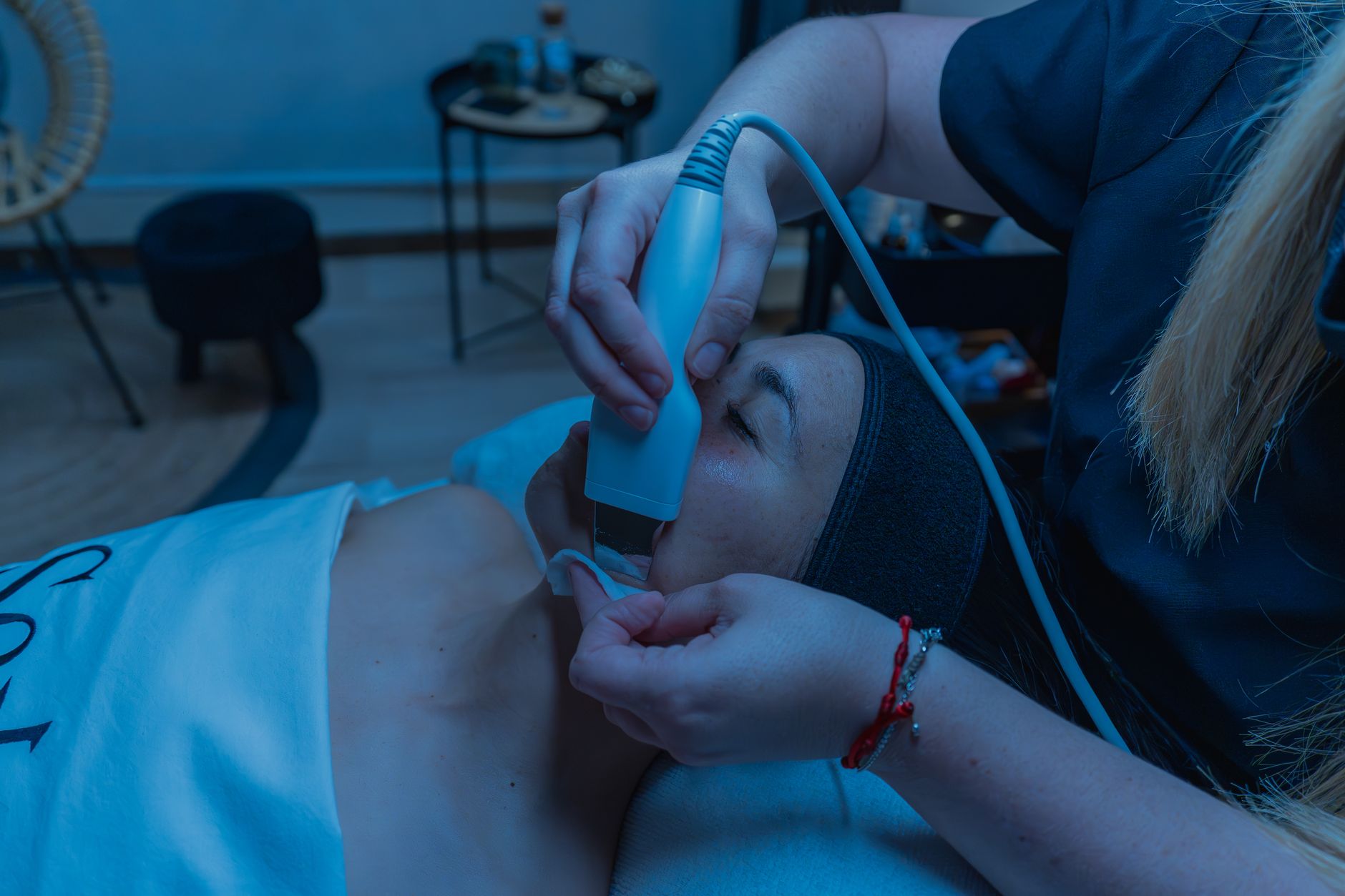
What a Master Esthetician Program Adds to Basic Training
A basic esthetics program prepares you for your state’s esthetician license: facials, hair removal, makeup, skin analysis and sanitation. A master or advanced program goes further, usually into chemical exfoliation, device work and treatments that sit closer to a clinical setting. The 105 programs on this page run from 150 to 1,300 clock hours, and most sit near 900.
That spread exists because there are two kinds of program under one name:
Before you compare prices, decide which one you need. Paying for 1,200 hours when you are already licensed wastes months, and a 150-hour add-on does nothing for you if you have no license underneath it.
Which States License the Master Tier
The master tier exists only in some states, and the name changes from board to board. Training past the basic license still teaches you more anywhere, but a master license is only something you can hold where the board issues one.
| State |
Advanced credential |
Training the board requires |
| Washington |
Master esthetician |
1,200 school hours, or an esthetician license plus 450 hours; 1,400 apprenticeship hours |
| Virginia |
Master esthetician |
Curriculum of at least 600 clock or credit hours, the same minimum as the esthetician curriculum |
| Ohio |
Advanced esthetician |
150 hours of board-approved advanced training beyond licensure, or 1,800 hours of salon practice |
| Minnesota |
Advanced practice (AP) esthetician |
An AP course certificate from a board-approved school, plus AP theory and written practical tests |
| Florida |
None |
The facial specialist registration takes 220 school hours and no state exam |
Utah, Nevada, Oregon, North Dakota and the District of Columbia also have an advanced or master tier. See each state’s page, such as the Utah esthetician license or the Washington esthetician license, for hours, exams and fees, or compare every state at once with the license hours checker.
Two cases trip people up. Florida schools sell programs called master, paramedical and clinical, and they are real training, but Florida itself issues no master credential, so the value is in the skills and in any move to a state that does. Texas and California issue only the basic license (750 hours in Texas, 600 in California), so the 900-hour advanced programs there train beyond what the state asks.
The Longest Programs, and What They Cost
Clock hours rank this list because the extra hours are what you are buying, and ties go to the higher overall score. Here is how the top of it compares on the numbers each school publishes.
| School |
Hours |
Schedule |
Published tuition |
Published outcomes |
| Paul Mitchell the School-Salt Lake City |
1,300 |
20 to 35 hours a week, day or evening |
$19,500; $1,665.43 technical kit separate |
Campus-wide 2024: graduation 63.82%, placement 74.04%, licensure 100% |
| Davis Technical College, Kaysville UT |
1,200 |
14 months |
$6,321 school estimate, with fees and course materials |
|
| International Beauty Education Center, Spokane WA |
1,200 |
9.5 months |
First academic year (900 hours) $12,600; $2,745 books and supplies separate |
Institution-wide 2025: graduation 94.94%, licensure 92.16%, placement 78.72% |
| Bridgerland Technical College, Logan UT |
1,200 |
13 to 15 months at 30 to 40 hours a week |
$4,123 school estimate for tuition and fees; books and supplies separate |
|
| Medspa Academies (NIMA Institute), South Jordan UT |
1,200 |
9 months full time; 11 to 14 months part-time evening; hybrid |
$18,200; $1,800 kit separate |
Utah campus, all programs, 2024: graduation 94.29%, placement 61.25%, licensure 100% |
| Acaydia School of Aesthetics, Provo UT |
1,200 |
8 months full time; 16 months part time |
$17,200; $2,147.32 kits and texts separate |
School-wide 2025: graduation 98.6% |
| Paul Mitchell the School-Logan |
1,200 |
|
$15,600; $1,801.63 technical kit separate |
Campus-wide 2024: graduation 90.15%, placement 70.09%, licensure 100% |
| Renaissance Academie (RACE), Provo UT |
1,200 |
35 to 64 weeks at 20 to 35 hours a week; hybrid |
$15,688; $2,880 kit, textbooks and supplies separate |
Distance education track, 2024: graduation 90%, placement 80%, licensing 71.43% |
| Bellus Academy, Manhattan KS |
1,150 |
33 weeks day, 46 weeks night |
$17,825.00; $2,923.02 kit and $1,874.16 program fees separate |
2024: completion 95%, placement 94.74%, licensure 100% |
| Aveda Arts & Sciences Institute Minneapolis |
1,100 |
Full-time days |
$25,300; $3,550 supply kit separate |
2024 cohort, campus-wide: graduation 85.7%, placement 77.8%, licensure 94% |
A blank cell means the school lists no schedule or program rate.
Read the outcome lines carefully. The Paul Mitchell figures are campus-wide NACCAS rates for every program combined, not master esthetics alone, and the International Beauty Education Center, NIMA and Acaydia rates are school-wide too. Renaissance Academie reports its master esthetics distance education track on its own. Bellus Academy reports its 2024 NACCAS rates for the program and splits out its hybrid track, which posted 100% completion, 66.67% placement and 100% licensure. A program-level figure tells you more than a campus blend.
Lower-Cost Ways Into Advanced Training
If the price of a 1,200-hour program stops you, there are shorter routes, mostly in Florida and Minnesota.
- Florida Professional Institute in Miami lists a 360-hour Advanced Spa Aesthetician program at $2,620 tuition, with $150 registration and $730 in books and supplies listed separately, finished in about 4.5 months.
- Bellasa Professional Institute in Miami Springs lists a 650-hour Medical Aesthetician Program at $6,260 tuition, with $1,345 for books, kit, lab and uniform listed separately, and day and evening classes.
- American Institute of Beauty in Largo lists a 600-hour Advanced Esthetics program at $8,950 tuition and a 720-hour Clinical Skin Care program at $10,565 tuition, each with a $1,495 book, kit and supplies charge listed separately.
- Ridgewater College in Willmar, Minnesota lists its Advanced Esthetics Certificate at $4,467, with tools and kit of about $2,500 listed separately, on a hybrid day schedule.
In Ohio, the advanced license asks for 150 hours past the basic license. Casal Aveda Institute in Niles and Brown Aveda Institute in Mentor teach 750-hour programs that combine skin care and advanced training in one enrollment. Casal lists $10,860 tuition with a $1,300 kit; Brown Aveda lists $13,088 tuition with a $1,200 kit and reports 2024 NACCAS rates of 95.66% graduation, 100% licensure and 88.79% placement for its esthetics and advanced esthetics programs at Mentor and Strongsville combined.
The 900-Hour Programs in Texas, California and Nevada
The middle of the list is crowded with 900-hour programs. They train well past the 600- or 750-hour basic license, and they vary a lot in results.
- Texas. Milan Institute runs a 900-hour Advanced Esthetician program at El Paso, San Antonio and Amarillo: about 36 weeks full time or 45 weeks part time, with hybrid theory. El Paso and Amarillo list $15,289.28 tuition, with $3,020.72 in books and materials and a $350 lab fee listed separately.
- California. Bellus Academy’s 900-hour Esthetics 103 at Chula Vista, El Cajon and Poway lists $13,950.00 tuition, with a $1,336.37 kit and $1,556.39 in program fees listed separately, and offers day or night tracks. Milan Institute’s California campuses list $16,850 in charges for on-time completers on their state fact sheets, but their state fact sheets show how far results can drift: on-time completion was 4.5% at Merced and 31.4% at Palm Desert for calendar 2024.
- Nevada. Avalon Institute-Las Vegas teaches 900 hours of Advanced Esthetics in 32 weeks of days or 49 weeks of evenings, at $13,950.00 tuition plus $2,516.00 in books, tools and supplies, and reports completion of 89%, placement of 67% and licensure of 78%.
California’s fact sheets come from the state Bureau for Private Postsecondary Education and measure on-time completion, which runs lower than the NACCAS graduation rate most schools post. Compare like with like.
Who Each Option Suits
- You already hold an esthetician license and want the advanced credential fast: an add-on course. In Ohio that means 150 hours; in Minnesota, a 500-hour advanced practice course such as PCI Academy’s, which lists $13,488 tuition with books and kit included and reports 100% graduation, 89% placement and 96% licensure for 2024-25.
- You are starting from zero in a master-tier state: a combined program sized to that state’s rule, such as the 1,200-hour Utah and Washington programs in the table.
- You work days: Bellus Academy’s night tracks, Avalon’s evening schedules or NIMA’s part-time evenings. 24 of the 105 programs list evening classes.
- You want part of the theory online: 22 of the programs are hybrid, including Evergreen’s Master Esthetician Hybrid and Blue Cliff Career College’s 1,200-hour Advanced Esthetician Program in Mobile, Alabama. Read the online esthetician school guide for what can move online.
- You plan to use federal aid: 80 of the 105 programs are at schools that say they take it. The financial aid ranking lists aid-eligible schools for every program type.
How to Choose a Master Program
- Match the hours to your state’s rule. Washington wants 1,200 hours from zero or 450 on top of a license. Ohio wants 150 past licensure. A program that falls short of your state’s number leaves you unable to apply.
- Read what’s listed beside the tuition. Aveda Minneapolis lists $25,300 tuition and a $3,550 supply kit. Paul Mitchell Salt Lake City lists $19,500 tuition and a $1,665.43 technical kit. Compare tuition with tuition, and the kits on their own. Line them up in the school cost comparer.
- Ask which outcome rate you are reading. A campus-wide rate mixes in cosmetology and barbering students. Program-level rates, like Bellus Academy’s or PCI Academy’s, are the better guide.
- Check the schedule against your life. 1,200 hours is about 40 weeks at 30 hours a week (Evergreen) or 65 weeks at 22.5 hours (Avalon Layton).
- Plan for a move. If you might relocate, a longer program travels better than a short add-on built around one state’s rule.
For many students, the basic license is enough to start working, and the advanced tier can come later as an add-on. That route spreads the cost and lets you earn while you train. The case for going straight to a master program is strongest in Washington, where 1,200 school hours earn the master license from zero, and in Utah, where the master programs run 1,200 to 1,300 hours, and for anyone set on clinical work, where advanced training is the usual entry point. The master esthetician guide covers the credential and its scope in more depth, and the medical esthetician guide covers clinical jobs.
If you are still choosing between schools at the basic level, start with the best esthetician schools ranking or the part-time and evening programs, then come back here when you are ready for the next tier. To see every school in one state, open its ranking, such as esthetician schools in Utah or Washington.