Comparison
Esthetician vs Aesthetician: Is There a Difference?
Esthetician vs Aesthetician: Is There a Difference?
In the esthetician vs aesthetician question, there's no difference in the job: both spellings name a licensed skin care professional, and the training, exams and license are the same. What changes is the word your state board prints on the license. Arizona, Arkansas, Delaware, Maine, Massachusetts, Tennessee, West Virginia and Wisconsin say aesthetician; most other states say esthetician, and New Jersey says skin care specialist.
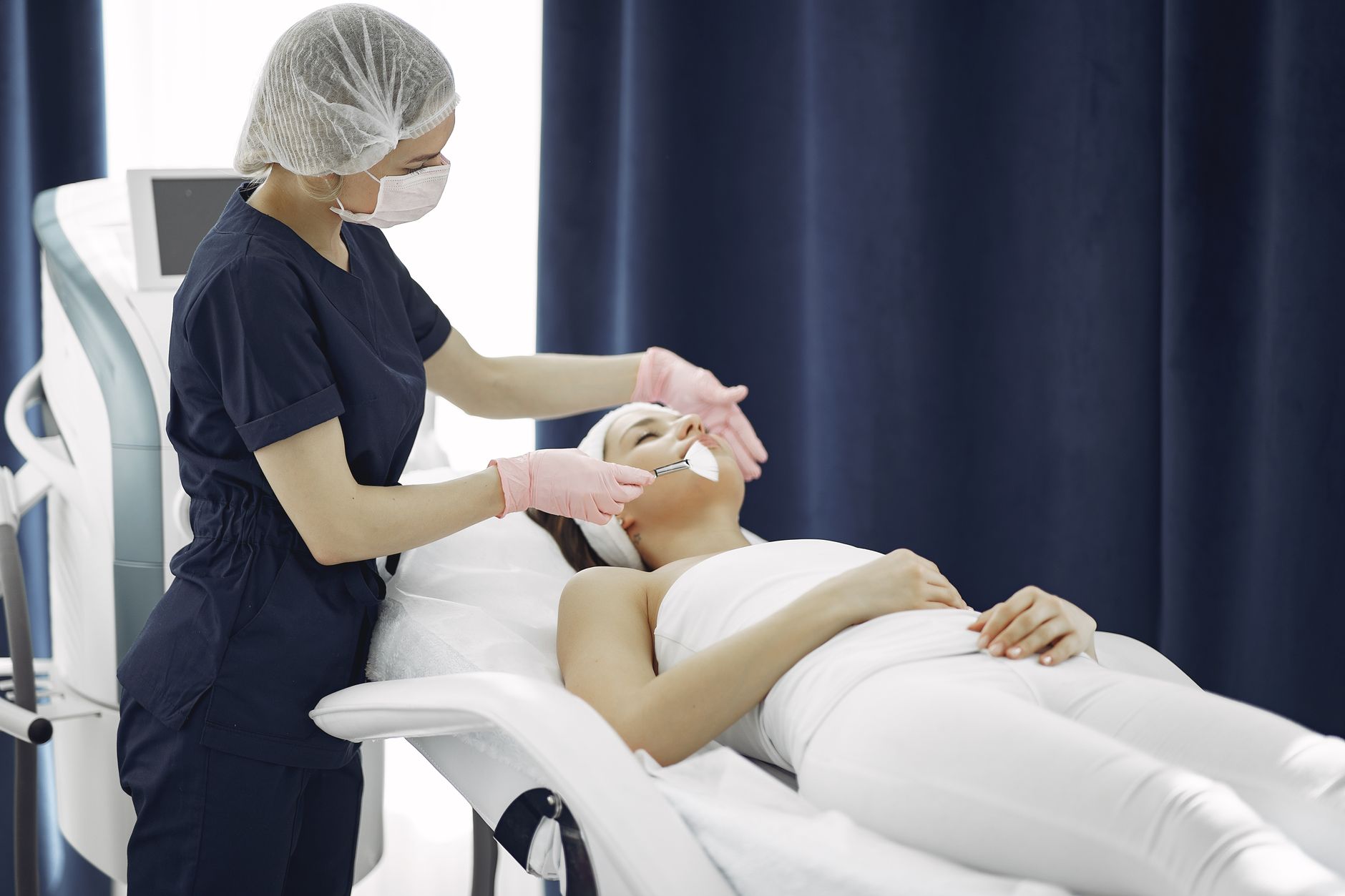
Esthetician vs Aesthetician: Same Job, Two Spellings
Esthetician and aesthetician are two spellings of one profession: a licensed specialist in skin care. You’ll see both on school websites, job boards and license cards, and they describe the same work. Facials, skin analysis, exfoliation, extractions, hair removal by waxing, lash and brow services and makeup.
The difference that matters is your state. Each state board decides what the license is called, how many training hours it takes and which exams you pass. A program in an “aesthetician” state and one in an “esthetician” state lead to the same kind of license. What you can do with it comes from that state’s rules, not the spelling.
Some people use “aesthetician” for medical skin care and “esthetician” for spa work. No state law draws that line. The closest thing to a split is the master or advanced license some states add on top of the basic one, covered below.
What Each State Calls the License
Fifty-one jurisdictions in the board data license estheticians. Most use the word esthetician. The rest use a variant:
| License title | States |
|---|---|
| Aesthetician | Arizona, Arkansas, Delaware, Maine, Massachusetts, Tennessee, West Virginia, Wisconsin |
| Skin Care Specialist | New Jersey |
| Facial Specialist (registration) | Florida |
| Limited Esthetician | Maryland |
| Esthetician (limited license) | Pennsylvania |
| Beauty Operator: Esthetician | Hawaii |
| Esthetics Practitioner Certificate | Oregon |
| Basic Esthetics Permit | Utah |
| Esthetician/Facialist/Facial Operator | Oklahoma |
| Esthetician (Class E) | Missouri |
Titles as each state board writes them, checked November 2026. Every other licensing state uses “Esthetician.”
The title tells you little about the training. Arizona’s aesthetician license takes 600 hours, the same as most esthetician states. Pennsylvania’s “limited” esthetician license takes 300, and Florida’s facial specialist registration takes 220 with no state exam.
Esthetician vs Aesthetics: The Training Is the Same
People also search “esthetician vs aesthetics,” usually meaning the job versus the field. Esthetics (or aesthetics) is the subject; an esthetician practices it. Schools use every variation in program names, and they all train for the same state license:
- Empire Beauty School-Chandler in Arizona calls its 600-hour course the “Esthetics / Aesthetics Program,” covering both spellings at once.
- Aveda Institute-Tucson calls its 600-hour course the “Esthiology Program.”
- Pure Aesthetics Natural Skincare School, also in Tucson, calls its 600-hour course simply “Aesthetics,” with a hybrid option.
What to compare instead of the name: clock hours against your state’s requirement, the published tuition, the schedule and the school’s licensure pass rate. Of 957 programs verified on schools’ own pages, the median is 600 clock hours and the median published tuition is $10,800.
Aesthetician Education Requirements
Whatever the spelling, the route has the same parts:
- Meet the state’s minimum age and education. Alabama, for example, sets 16 and ten grades of school.
- Finish a state-approved program of the required hours. Thirty states set 600 hours; the range is 200 (Utah’s basic permit) to 1,000 (Alabama and Kansas).
- Pass the board’s exams. Many states use written and practical exams; California uses a written exam only, and several states use the national NIC exams.
- Apply for the license and pay the fees.
A handful of states also allow an apprenticeship in place of school. Alabama accepts 2,000 apprentice hours over three years, and Washington accepts 800 apprenticeship hours for the esthetician license.
The license hours checker gives your state’s figure, and the how to become an esthetician guide walks through each step.
Hours by Title: Aesthetician States Compared
Because the title and the hours don’t track each other, it helps to see them side by side:
| State | Title | Required hours |
|---|---|---|
| Arizona | Aesthetician | 600 |
| Tennessee | Aesthetician | 750 |
| Wisconsin | Aesthetician | 450 |
| Massachusetts | Aesthetician | 600 |
| Texas | Esthetician | 750 |
| California | Esthetician | 600 |
| Pennsylvania | Esthetician (limited license) | 300 |
| Alabama | Esthetician | 1,000 |
From each state board’s rules, checked November 2026.
If you might move, train to the higher number. A 450-hour Wisconsin transcript falls short of Tennessee’s 750 even though both states say aesthetician.
What State Boards Call the License
| State | License title | Hours |
|---|---|---|
| Alabama license | Esthetician | 1,000 |
| Alaska license | Esthetician | 350 |
| Arizona license | Aesthetician | 600 |
| Arkansas license | Aesthetician | 600 |
| California license | Esthetician | 600 |
| Colorado license | Esthetician | 600 |
| Connecticut license | Esthetician | 600 |
| Delaware license | Aesthetician | 600 |
| District of Columbia license | Esthetician (Basic) | 600 |
| Florida license | Facial Specialist (registration) | 220 |
| Georgia license | Esthetician | |
| Hawaii license | Beauty Operator: Esthetician | 600 |
| Idaho license | Esthetician | 600 |
| Illinois license | Esthetician | 750 |
| Indiana license | Esthetician | 700 |
| Iowa license | Esthetician | 600 |
| Kansas license | Esthetician | 1,000 |
| Kentucky license | Esthetician | 750 |
| Louisiana license | Esthetician | 750 |
| Maine license | Aesthetician | 600 |
| Maryland license | Limited Esthetician | 600 |
| Massachusetts license | Aesthetician | 600 |
| Michigan license | Esthetician | 750 |
| Minnesota license | Esthetician | 600 |
| Mississippi license | Esthetician | 600 |
| Missouri license | Esthetician (Class E) | 750 |
| Montana license | Esthetician | 650 |
| Nebraska license | Esthetician | 600 |
| Nevada license | Esthetician | 600 |
| New Hampshire license | Esthetician | 600 |
| New Jersey license | Skin Care Specialist | 600 |
| New Mexico license | Esthetician | 600 |
| New York license | Esthetician | 600 |
| North Carolina license | Esthetician | 600 |
| North Dakota license | Esthetician | 600 |
| Ohio license | Esthetician | 600 |
| Oklahoma license | Esthetician/Facialist/Facial Operator | 600 |
| Oregon license | Esthetics Practitioner Certificate | 444 |
| Pennsylvania license | Esthetician (limited license) | 300 |
| Rhode Island license | Esthetician | 600 |
| South Carolina license | Esthetician | 450 |
| South Dakota license | Esthetician | 600 |
| Tennessee license | Aesthetician | 750 |
| Texas license | Esthetician | 750 |
| Utah license | Basic Esthetics Permit | 200 |
| Vermont license | Esthetician | 500 |
| Virginia license | Esthetician | 600 |
| Washington license | Esthetician | 750 |
| West Virginia license | Aesthetician | 600 |
| Wisconsin license | Aesthetician | 450 |
| Wyoming license | Esthetician | 600 |
License titles as each state board writes them, checked November 2026.
Aesthetician Programs Compared
Program names vary, but the numbers that matter can be compared directly. Here are 600-hour programs from schools that publish a total, with the schedule and the school’s own outcome figures where it reports them:
| Program | Location | Published tuition | Schedules | Published outcomes |
|---|---|---|---|---|
| Advance Beauty College Esthetician | Garden Grove, CA | $5,790 | Day, evening, part time, hybrid theory | |
| Bellus Academy-El Cajon Esthetics | El Cajon, CA | $9,300 | Day, evening, hybrid theory | Licensure 100%, completion 92.11% (2024 NACCAS) |
| Avalon Institute-Phoenix Esthetics | Phoenix, AZ | $9,300 | Day (21 weeks), evening (33 weeks) | Licensure 83%, completion 94% (NACCAS) |
| Empire Beauty School-Tucson Esthetics / Aesthetics | Tucson, AZ | $10,353 | Full time (18 weeks), part time (35 weeks) | Licensure 84.35%, campus-wide (NACCAS 2024) |
| Aveda Institute-Tucson Esthiology | Tucson, AZ | $12,000 | Day, evening, part time, hybrid theory |
Totals are the school’s own figures for 2026 or 2026-27; kits and books listed separately are not included. A blank outcomes cell means the school posts no rate for that program.
Two Arizona schools here call the license aesthetician because the state does, and two California schools call it esthetician for the same reason. The hours are identical. What separates them is price, schedule and how many graduates pass the board exam.
Aesthetics Training Near Me: Finding a Program
Most searches for “aesthetics training near me” or “aesthetician programs” end at the same place: a state-approved school in your area. The school has to be approved in the state where you’ll take the exam, and its hours have to meet that state’s rule.
Start with your state’s ranking, which lists every verified program there with hours, totals and outcomes:
- Arizona esthetician schools, an aesthetician-title state at 600 hours.
- Tennessee esthetician schools, an aesthetician-title state at 750 hours.
- Wisconsin esthetician schools, where the aesthetician license takes 450 hours and technical colleges also run associate degrees.
- California esthetician schools, with the most verified programs of any state.
If you work days, the part-time esthetician programs ranking narrows the list to evening, weekend and part-time schedules. Of the 957 verified programs, 104 teach part of the theory online, but every one holds the hands-on hours in person.
Esthetician vs Medical Esthetician
“Medical esthetician” and “clinical esthetician” are job descriptions, not license titles. No state board licenses a medical esthetician as such. You start with the basic license, and in ten jurisdictions you can add a master or advanced tier that widens what you may do.
The scope difference can be large. In Washington, a licensed esthetician may use any device except a laser. The master esthetician license adds medium-depth peels and medical devices such as lasers, intense pulsed light and radio frequency, under whatever supervision state law requires. In Virginia, the master esthetician adds lymphatic drainage, chemical exfoliation and microdermabrasion.
Schools name these programs many ways: Advanced Esthetician at Milan Institute campuses, Paramedical Esthetician at Boca Beauty Academy, Boca Raton, Clinical Skin Care at American Institute of Beauty. The medical esthetician guide covers the training and rules.
Aesthetic Injector Training Is a Different Career
Searches for “aesthetic injector training” and “registered nurse aesthetician” point to a separate path. Injecting neurotoxins or fillers is medical practice, and no esthetics license covers it. Washington’s law states that the practice of esthetics “under no circumstances” includes injections. Virginia’s law says esthetics is not a healing art and excludes the practice of medicine.
If injections are your goal, the route runs through a nursing or other medical license, not esthetics school. If you want skin care that sits close to medical work, such as peels, device treatments and pre- and post-procedure care, the esthetician license plus a master tier where your state offers one is the route this site covers.
How to Pick a Program, Whatever It’s Called
Ignore the spelling and check these points against the program’s own pages:
- Hours: at least your state’s requirement, or the requirement where you plan to work.
- Published licensure rate: among programs that publish one, the median is 94%.
- Total and extras: the published tuition, plus any kit or books the school lists separately.
- Schedule: 385 programs offer evening, weekend or part-time schedules.
- Accreditor and aid: whether the school names an accreditor such as NACCAS and offers federal aid.
The best esthetician schools ranking scores every verified program on those facts, and the school finder searches by location. If you’re also weighing hair and nails, see the esthetician vs cosmetologist guide.
Frequently Asked Questions
Is Aesthetician the Correct Spelling?
Both spellings are correct. Eight state boards use aesthetician on the license, and most others use esthetician. Use the word your state's board uses on its application.
Can an Aesthetician Do Botox or Fillers?
No. Injections are medical procedures. Washington's statute says the practice of esthetics under no circumstances includes injections, and Virginia's law says esthetics is not a healing art.
Does an Aesthetician License Transfer to an Esthetician State?
The spelling doesn't matter for transfers; hours and exams do. Most states require 600 hours, but Illinois, Kentucky, Louisiana, Michigan, Missouri, Tennessee, Texas and Washington require 750, and Alabama and Kansas require 1,000.
What Is an Esthiologist?
Esthiology is the name Aveda-affiliated schools give their esthetics programs. A program such as the Esthiology Program at Aveda Institute-Tucson trains you for the same state esthetician license.
Is a Cosmetician the Same as an Esthetician?
Some California schools call their 600-hour skin care course a cosmetician program, but it prepares you for California's esthetician license, which requires at least 600 hours.
Keep Reading
- Medical EstheticianWhat a medical esthetician does, the license it starts from and the training that leads to medical spa and dermatology work
- Esthetician vs CosmetologistHow esthetics and cosmetology differ in training hours, license scope and what each job pays
- Esthetician SalaryWhat estheticians earn nationally and in every state (BLS OEWS), the spread from entry level to the top tenth, and the roles the license leads to
- How to Become an EstheticianThe school hours, state board exams and license steps that take you from no experience to a licensed esthetician
- Esthetician ProgramsWhat esthetician training programs cover, how many clock hours they run, what they cost and which schedules schools offer
- Esthetician School CostWhat esthetician school costs, from the program tuition figures schools publish, what the total leaves out and how to pay for it
- Best Esthetician SchoolsEvery verified program, ranked
- Esthetician License by StateHours, exams and fees in every state
Sources
- Revised Code of Washington 18.16.020: definition of the practice of esthetics
- Code of Virginia 54.1-700: definitions of esthetics and master esthetician
- Tennessee Board of Cosmetology and Barber Examiners: aesthetician license
- Arizona Revised Statutes 32-510: aesthetician training requirements
- State licensing boards' esthetician license pages, checked November 2026