Career Guide
How to Become an Esthetician
How Do You Become an Esthetician?
To become an esthetician, you finish a state-approved esthetics program, pass your state board's exams and apply for the license. Thirty states require 600 training hours, and the verified programs that state a length have a median of 24 weeks, so a full-time student is usually licensed within the year. Skincare specialists earn a median of $45,330 a year (BLS, May 2025). Check your state's hours on the license page before you pick a school.
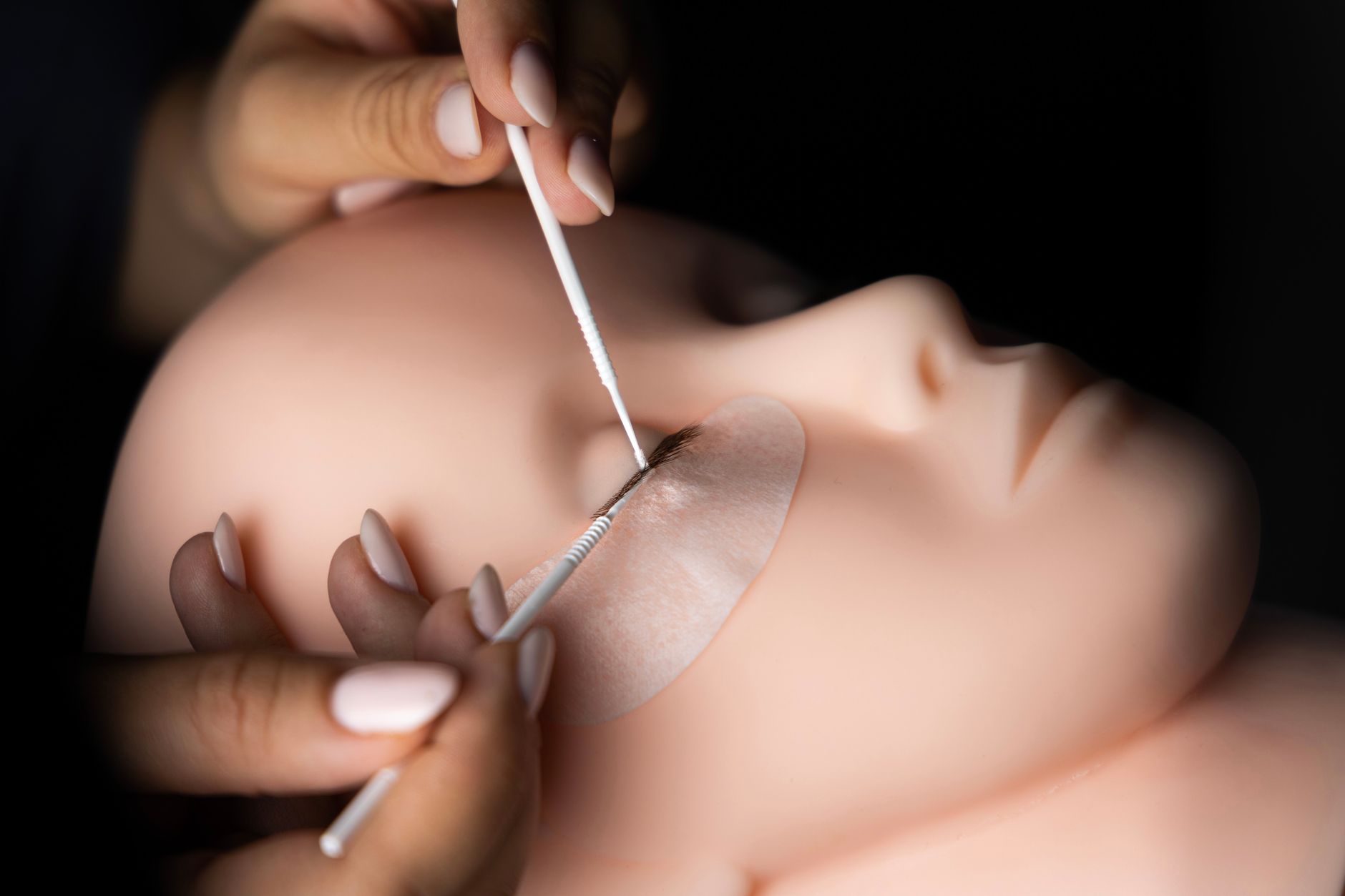
How to Become an Esthetician, Step by Step
The path is the same in almost every state. The order matters, because each step depends on the one before it.
- Look up your state’s rules. Hours, exams and minimum age differ by state. Your state license page lists them from the board.
- Choose a state-approved esthetics program whose clock hours match your state’s requirement.
- Apply for financial aid if you need it, starting with the FAFSA, before your start date.
- Complete every required hour, in theory classes and on clients in the student clinic.
- Pass the state board exams, usually a written test and a practical test.
- Apply for your license, then start work and renew on your state’s schedule.
Most people go from step two to a license in under a year. The rest of this page covers each decision with the numbers from 957 verified programs at 837 campuses.
Esthetician Education Requirements Before You Enroll
You don’t need a college degree or prior beauty experience. You do need to meet your state’s minimum age and schooling rules, which are low.
- Age: 16 to 18, depending on the state.
- Schooling: many states ask for a 10th grade education or the equivalent. Maryland and Michigan accept 9th grade; Kentucky, Iowa and Montana ask for a high school diploma or equivalent.
- Health and safety: Florida adds a 4-hour HIV/AIDS course, and some states attach infection control training to renewal.
Choosing a School: Beauty School, Chain or Community College
Esthetics is taught in three kinds of places, and they differ in cost, pace and schedule.
- Independent and chain beauty schools run most programs: 664 of the verified campuses are private for-profit schools. Chains such as Paul Mitchell, Aveda, Empire and Avalon publish catalogs with set prices and frequent start dates.
- Community and technical colleges run fewer programs (156 public campuses), often at a lower price, but on a semester calendar.
- Master or advanced programs at either kind of school train for the higher tier in the ten jurisdictions that have one.
Here is how a few real programs compare.
| School | Clock hours | Length | Tuition | Kit and books (separate) |
|---|---|---|---|---|
| Advance Beauty College, Garden Grove, CA | 600 | 15-30 weeks | $5,790 | $900 kit, $180 book |
| Tuana European Beauty Academy, Fort Collins, CO | 600 | 5 months full time; 8 months part time | $7,000 | $1,600 |
| Avalon Institute-Mesa, AZ | 600 | 21 weeks day; 33 weeks evening | $9,300 | $2,002 |
| Penrose Academy, Scottsdale, AZ | 600 | 20 weeks on four days; 30 weeks on two days or four evenings | $12,875 | $1,975 kit fee |
| Indian River State College, Fort Pierce, FL | 220 (facials) | About one semester | Approximate cost $1,500 |
The Florida college’s figure is low because Florida’s facial specialist registration needs only 220 hours. Compare schools within your own state, where the hours are the same. The best esthetician schools ranking scores every program on outcomes, cost, federal track record and schedule.
What You Learn in Esthetics School
The hours split between theory in the classroom and practice on mannequins, classmates and then paying clients in the school’s student clinic. State rules show what boards expect the hours to hold:
- Oregon spells it out most precisely: 444 hours plus 220 practical operations, and another 40 hours of career development and Oregon laws and rules.
- Missouri’s 750 hours include 100 hours of makeup application.
- Alaska’s 350 hours must include the practical operations listed in its regulations.
- Arizona apprenticeships must include at least 200 hours of infection protection and law review.
Some treatments sit beyond the basic license. In Colorado, chemical resurfacing exfoliation needs 24 more hours of training and permanent makeup 132 more. In North Dakota, laser, microneedling and advanced peels need added certifications on top of the advanced license. If a school advertises those services, check whether your state lets a basic esthetician perform them.
If you are still deciding between skin care and a broader beauty license, the esthetician vs cosmetologist guide compares the hours and scope. Cosmetology takes far longer in most states: 1,500 hours in Alabama, Illinois and North Carolina, against 600 to 1,000 for esthetics.
How Long It Takes on a Full-Time or Part-Time Schedule
Your state’s hours divided by your weekly hours sets the length. Most verified programs teach 600 hours, and the median stated length is 24 weeks, but the same 600 hours can take much longer at night.
- Empire Beauty School-Chandler lists 18 weeks full time and 35 weeks part time.
- Avalon Institute-Mesa runs 21 weeks by day at 33.75 hours a week, or 33 weeks in the evening at 22.5 hours.
- Pure Aesthetics Natural Skincare School in Tucson lists 18 weeks full time, 34 weeks part-time by day and 30 weeks part-time in the evening.
If you work a full-time job, an evening or part-time schedule is the realistic route: 216 verified programs offer evenings and 290 offer part time. The part-time programs ranking lists them, and the guide to how long esthetician school takes breaks length down by state.
The Route to Your Esthetician License
- Choose a state-approved esthetics program: 957 verified, with a median of 600 clock hours.
- Finish the hours your state requires: 200 to 1,000, most often 600.
- Pass the state board's written and practical exams.
- Apply for the license and start work: skincare specialists earn a median of $45,330 (BLS, May 2025).
Esthetician Training Hours by State
| Required hours | States |
|---|---|
| Under 500 hours | Alaska, Florida, Oregon, Pennsylvania, South Carolina, Utah, Wisconsin |
| 500 to 600 hours | Arizona, Arkansas, California, Colorado, Connecticut, Delaware, District of Columbia, Hawaii, Idaho, Iowa, Maine, Maryland, Massachusetts, Minnesota, Mississippi, Nebraska, Nevada, New Hampshire, New Jersey, New Mexico, New York, North Carolina, North Dakota, Ohio, Oklahoma, Rhode Island, South Dakota, Vermont, Virginia, West Virginia, Wyoming |
| 601 to 750 hours | Illinois, Indiana, Kentucky, Louisiana, Michigan, Missouri, Montana, Tennessee, Texas, Washington |
| More than 750 hours | Alabama, Kansas |
From each state board's esthetician license rules, checked November 2026.
What Esthetician School Costs and How to Pay
Among the 588 programs that publish their tuition, the median is $10,800. The range runs from $563.20 at Robert Morgan Educational Center and Technical College in Miami (a 220-hour facials program) to $25,300 at Aveda Arts & Sciences Institute Minneapolis, which combines esthetics with Minnesota’s advanced practice tier.
Two things change the real price:
- Kits and books. Most schools list them apart from tuition. Avalon adds $2,002 for books, tools and supplies to its $9,300 tuition, and Penrose Academy adds a $1,975 kit fee to its $12,875 tuition. Count them before you compare schools.
- Federal aid. 691 of the verified programs are at schools that say federal financial aid is available. A Pell Grant does not have to be repaid, except in certain cases, and you apply with the FAFSA.
The cost guide compares tuition and kits by state, and the financial aid guide explains how aid works for clock-hour programs.
Passing the State Board Exam
The exam is where training shows. Most states give a written theory test and a practical test, often the national NIC exams delivered by PSI or Prov. California and Massachusetts test only in writing, and Florida’s facial specialist registration has no state exam.
Schools report licensure pass rates in their consumer disclosures, NACCAS annual reports or, in California, state School Performance Fact Sheets. Across 250 programs with a published rate, the median is 94%. Some examples with their source and year:
- Bellus Academy-Chula Vista: licensure 100%, completion 92.86% (2024 NACCAS outcomes).
- Avalon Institute-Mesa: licensure 76%, completion 94% (NACCAS annual report submitted Nov 2025).
- Empire Beauty School-Chandler: licensure 92.11%, campus-wide across all programs (NACCAS 2024 annual report).
A campus-wide rate mixes esthetics with cosmetology and other programs, so weigh a program-level rate more heavily. The best outcomes ranking sorts schools by these published rates.
Getting Licensed and Starting Work
Once you pass, you apply to the board, pay the license fee and receive your license. Fees are modest: Texas charges a $50 application fee and California $75 to apply and test plus $40 for the license.
The federal government counts estheticians as skincare specialists. In May 2025, 72,890 people held the job nationally, with a median of $45,330 a year, or $21.79 an hour. The lowest tenth earned under $29,580 and the top tenth over $82,050, a spread that reflects setting, location and how many repeat clients you build. Pay by state is in the esthetician salary guide.
Requirements in Texas and California
These are the two largest states for esthetics training, and their rules differ.
| Rule | Texas | California |
|---|---|---|
| Training hours | 750 | 600 |
| Minimum age | 17 | 17 |
| Exams | Written and practical (PSI) | Written (PSI) |
| Fee | $50 application | $75 application and exam, $40 license |
| Renewal | Every 2 years, 4 hours of continuing education | Every 2 years, $50, no continuing education |
Texas also issues a combination manicurist and esthetician license at 800 hours. The Texas license page and Texas school ranking cover the details, as do the California license page and California ranking.
Going Further: Master and Medical Esthetics
After the basic license, some estheticians train for more. Ten jurisdictions issue a master or advanced license, from Ohio’s 150 extra hours to 1,200 hours in Utah and Washington. These tiers widen the treatments and devices you may use. If you want medical spa or dermatology work, the master esthetician guide and the medical esthetician guide explain the routes.
A Checklist Before You Enroll
Use these points to compare the schools on your shortlist:
- Hours match your state. A 600-hour program won’t license you in Texas (750) or Alabama (1,000).
- A published pass rate, with its year. The median is 94%; see where each school sits against it, and whether the rate is for esthetics or the whole campus.
- Tuition plus the kit. Add the kit, books and fees the school lists separately.
- A schedule you can keep. Compare full-time and evening lengths for the same program.
- Federal aid, if you need it, and the school’s accreditor (509 verified programs name NACCAS).
The school finder filters programs near you by schedule and cost.
Frequently Asked Questions
Can You Become an Esthetician Without Going to School?
In some states. Alabama accepts 2,000 apprentice hours, Missouri 1,500, and Delaware, Hawaii, Idaho, Mississippi, Nevada and Oklahoma 1,200, all under a licensed esthetician. You still pass the same board exams. Most states' apprenticeship hours are higher than their school hours.
What Is the Fastest Way to Become an Esthetician?
Train in a state with low hours and go full time. Utah's basic esthetics permit needs 200 hours. In a 600-hour state, full-time programs such as Empire Beauty School-Chandler (18 weeks) and Advance Beauty College (as few as 15 weeks) finish soonest.
Do You Need a Degree to Be an Esthetician?
No. The license needs a certificate or diploma program of the required clock hours, not a degree. Some community colleges offer associate degrees in esthetics, such as Ridgewater College's Advanced Esthetics AAS in Minnesota, but the degree is optional.
How Old Do You Have to Be to Become an Esthetician?
Between 16 and 18 to be licensed, depending on the state. Texas and California set 17; Kentucky, Montana and Nevada set 18; Alabama, Ohio and Oklahoma set 16.
Is It Hard to Pass the Esthetician State Board Exam?
Most trained candidates pass. Among the 250 programs with a published licensure rate, the median is 94%. Rates vary by school, so compare the rate and its year before you enroll.
Can You Become an Esthetician Online?
Only partly. 104 of the 957 verified programs teach some theory online, and every one of them holds the hands-on hours in person, because the board exams test practical skills.
Keep Reading
- Master EstheticianThe states with a master or advanced esthetics license, the hours they require and the schools that train for it
- Esthetician ProgramsWhat esthetician training programs cover, how many clock hours they run, what they cost and which schedules schools offer
- Esthetician School CostWhat esthetician school costs, from the program tuition figures schools publish, what the total leaves out and how to pay for it
- How Long Esthetician School TakesHow many clock hours and weeks esthetician school takes, by state requirement and by the schedules schools publish
- Best Esthetician SchoolsEvery verified program, ranked
- Esthetician License by StateHours, exams and fees in every state
Sources
- U.S. Bureau of Labor Statistics: Skincare Specialists (39-5094), May 2025
- Texas Department of Licensing and Regulation: apply for an esthetician license
- California Board of Barbering and Cosmetology: license requirements
- Federal Student Aid: Federal Pell Grants
- State licensing boards' esthetician license pages, checked November 2026
- U.S. Bureau of Labor Statistics, Occupational Employment and Wage Statistics, May 2025: Skincare Specialists (39-5094)