Career Guide
Medical Esthetician: Training, License and Where You Work
What Is a Medical Esthetician and How Do You Become One?
A medical esthetician is a licensed esthetician who works in a medical setting, such as a dermatology practice, plastic surgery office or medical spa. No state issues a separate medical esthetician license: you start with the esthetician license, and in states with a master or advanced tier, such as Washington and Oregon, the higher license is what allows device and deeper peel work. Injections are never part of esthetics.
What a Medical Esthetician Does
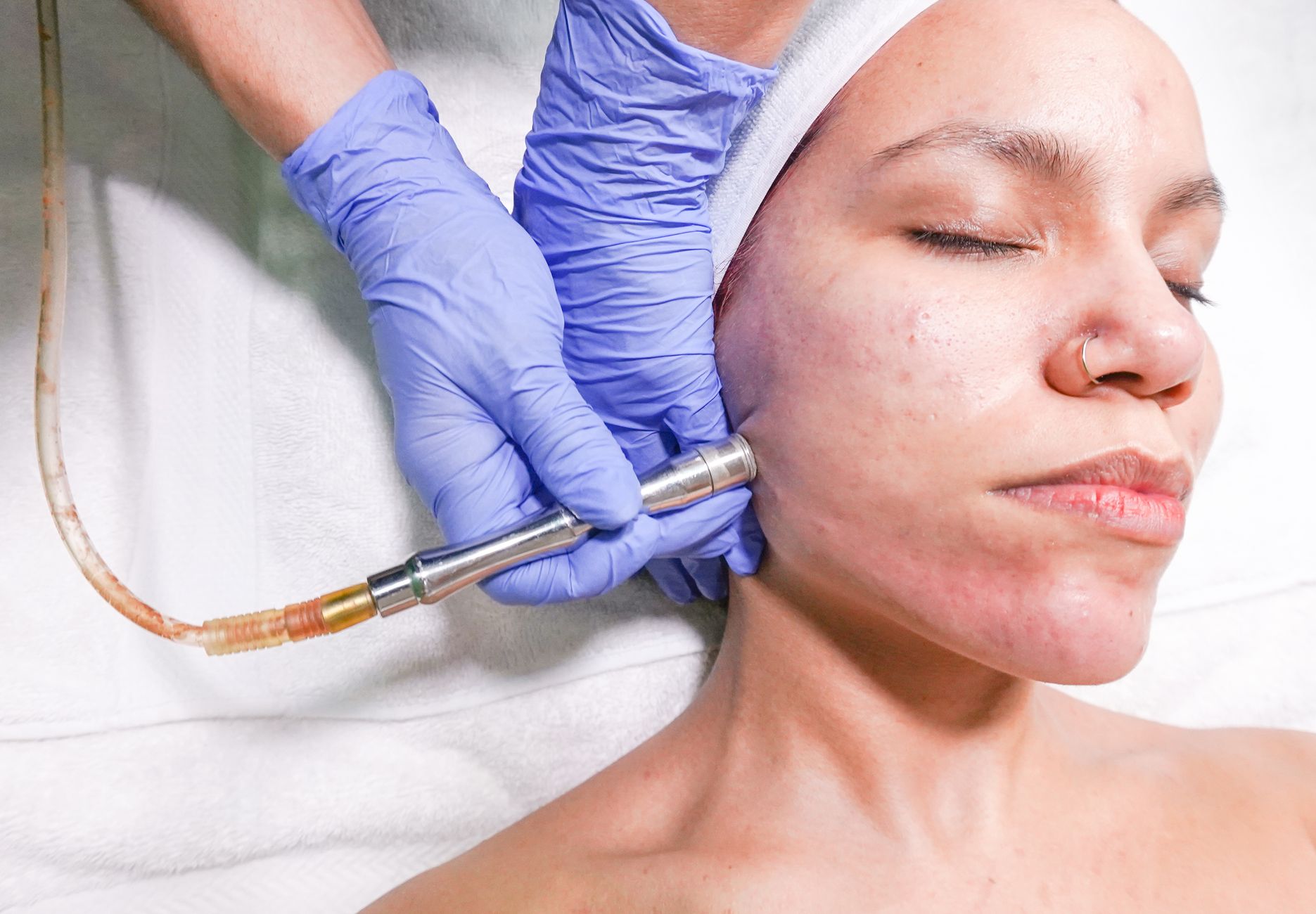
A medical esthetician gives skin care in a setting run by physicians or other licensed health professionals: a dermatology practice, a plastic surgery office or a medical spa. The work usually centers on preparing skin before procedures, caring for it afterward, and treatments within the esthetician’s own scope, such as facials, exfoliation, peels and, where the state allows, device treatments.
The title describes where you work, not a separate license. “Clinical esthetician” and “paramedical esthetician” mean the same thing in job ads and school catalogs. In every case, the legal limits come from your state’s esthetics license, and in some states from a master or advanced license on top of it.
Is There a Licensed Medical Esthetician?
No state board in the board data issues a license called medical esthetician. What exists is:
- The basic esthetician license, which every state except Puerto Rico in the board data issues, at 200 to 1,000 hours.
- A master or advanced tier in a handful of states, which adds treatments such as medium-depth peels, lymphatic drainage, microdermabrasion or device work.
So a “licensed medical esthetician” is a licensed esthetician, or a licensed master or advanced esthetician, working in a medical setting. A school can’t award a state license; only the board can. A certificate titled “medical esthetics” proves training, not scope.
Esthetician vs Medical Esthetician: What Your State Allows
The scope gap between a spa esthetician and a medical one is set by state law. These are the states with the clearest rules in the board data and statutes:
| State | Basic esthetician | Advanced or master tier |
|---|---|---|
| Washington | Any device except lasers; superficial and light peels | Master Esthetician (1,200 hours): medium-depth peels and medical devices including lasers, IPL and radio frequency, under required supervision |
| Virginia | Nonlaser devices; not a healing art | Master Esthetician (600-hour curriculum): lymphatic drainage, chemical exfoliation, microdermabrasion, no lasers |
| Oregon | Esthetics practitioner certificate (444 hours) | Certified Advanced Esthetician (500 hours): nonablative procedures under a collaborative agreement with a health professional |
| North Dakota | Esthetician (600 hours) | Advanced Esthetician (1,100 hours): laser, microneedling and advanced peels need added certifications |
| Nevada | Esthetician (600 hours) | Advanced Esthetician (900 hours): exams include esthetic medical devices |
From each state’s statute or board rules, checked November 2026.
In states without a higher tier, such as Texas (750 hours) and California (600 hours), the basic license is the whole scope. Read your board’s rules on devices and peels before you pay for advanced training.
Esthetician Nurse and Registered Nurse Aesthetician
Searches for “esthetician nurse” and “registered nurse aesthetician” mix up two licenses. A nurse who works in aesthetics practices under a nursing license, issued by a different board with different rules. Washington’s law says the practice of esthetics “under no circumstances” includes injections, and Virginia’s law says esthetics is not a healing art and excludes the practice of medicine.
If your goal is injecting neurotoxins or fillers, esthetics school won’t get you there. If your goal is advanced skin care beside physicians and nurses, the esthetician license, plus a master tier where your state has one, is the route.
How to Become a Medical Esthetician
- Check your state’s rules with the license hours checker: basic hours, and whether a master or advanced tier exists.
- Finish a state-approved esthetics program. Thirty states require 600 hours.
- Pass the board exams and get your esthetician license.
- In a master-tier state, complete the advanced hours and exams. Several states let licensees take a shorter route: Washington accepts a licensed esthetician plus 450 hours, and Nevada a licensee plus 300.
- Add any device certification your state requires. North Dakota requires the National Council on Laser Certification exam for laser and IPL work.
- Apply for jobs in dermatology offices, plastic surgery practices and medical spas.
States With an Advanced Esthetics License
These 10 states license a second esthetics tier above the basic license: District of Columbia, Florida, Minnesota, Nevada, North Dakota, Ohio, Oregon, Utah, Virginia and Washington.
| State | License | Hours |
|---|---|---|
| District of Columbia license rules | Esthetician (Master/Advanced) | 600 |
| Florida license rules | Full Specialist (registration) | 400 |
| Minnesota license rules | Advanced Practice (AP) Esthetician | |
| Nevada license rules | Advanced Esthetician | 900 |
| North Dakota license rules | Advanced Esthetician | 1,100 |
| Ohio license rules | Advanced Esthetician | 150 |
| Oregon license rules | Certified Advanced Esthetician | 500 |
| Utah license rules | Master Esthetics License | 1,200 |
| Virginia license rules | Master Esthetician | 600 |
| Washington license rules | Master Esthetician | 1,200 |
Medical and Paramedical Esthetics Programs
Florida has the most programs with medical names in the verified set. Florida registers facial specialists after 220 hours with no state exam, so these longer programs train beyond the state minimum:
| Program | Location | Hours | Published tuition | Notes |
|---|---|---|---|---|
| Bellasa Professional Institute Medical Aesthetician Program | Miami Springs | 650 | $6,260 | Day and evening; $1,345 kit listed separately |
| Cortiva Institute, St. Petersburg Paramedical Skin Care | St. Petersburg | 600 | $9,859 | About 8 months; 79% employment rate (ACCSC, 2023-24) |
| American Institute of Beauty Clinical Skin Care | Largo | 720 | $10,565 | $1,495 kit listed separately |
| Boca Beauty Academy, Boca Raton Paramedical Esthetician | Boca Raton | 600 | $11,400 | 20 weeks full time, 28 part time |
| Cortiva Institute, Maitland Advanced Paramedical Skin Care | Maitland | 976 | $15,834 | About 11 months; 71% employment rate (ACCSC, 2023-24) |
Totals are each school’s published figure; kits listed separately aren’t added.
The training can be worth it for the clinical skills, but in Florida it doesn’t change the registration you hold. Compare it with Florida’s 220-hour facial specialty programs, such as South Dade Technical College at $563.20, before you commit.
For the higher license itself, master-tier states have the programs that lead to it. Evergreen Beauty College - Everett runs a 1,200-hour Master Esthetician Hybrid in Washington for $19,800, and Avalon Institute-Las Vegas runs a 900-hour Advanced Esthetics program in Nevada for $13,950. The master esthetician guide lists every state’s tier and program.
Medical Aesthetics Training Near Me: Where to Look
Where you train decides what the license lets you do, so start with the state ranking for where you’ll work:
- Washington esthetician schools: the master license allows lasers and other medical devices under supervision rules. Paul Mitchell the School-Spokane runs a 1,200-hour Master Esthetics program at $18,924, with a campus-wide licensure rate of 98.9% (NACCAS, 2024).
- Utah esthetician schools: a 1,200-hour master license. Avalon Institute-Layton reports 87% completion and 88% licensure for its Master Esthetics program (NACCAS annual report).
- Nevada esthetician schools: a 900-hour advanced license with device exams.
- Minnesota esthetician schools: the advanced practice license, offered at beauty schools and at community and technical colleges.
- Florida esthetician schools: the most programs with medical or paramedical names, but no master tier.
Who the Medical Path Suits, and the Trade-Offs
It suits you if you like clinical work, follow protocols closely and want to work beside physicians and nurses rather than in a spa.
The trade-offs are real. The higher license costs more time and money: master programs in Utah and Washington run 1,200 hours with published tuition figures of $15,000 to $19,800, against 600 hours for most basic licenses. And the license you earn only helps in states with a matching tier, so moving can cost you scope.
A middle route works for many people: earn the basic license in a 600-hour program, start working, and add the advanced hours through a licensee route later, such as Washington’s 450 hours or Ohio’s 150.
Dermatology Esthetician Jobs and Pay
Dermatology offices, plastic surgery practices and medical spas hire licensed estheticians. In master-tier states, the higher license is what covers device work, so it widens the jobs you can take. Before applying, check that the treatments in the job ad fall within your license in that state.
BLS publishes one wage series for all skincare specialists, with no separate figure for medical settings. Nationally the median was $45,330 in May 2025; the middle half earned $36,040 to $59,700 and the top tenth $82,050 or more. In Washington, where the master license allows laser work, the median was $79,320. The esthetician salary guide has every state.
How to Choose Training for Medical Esthetics
- Match the license, not the program name. “Medical” or “paramedical” on a certificate doesn’t widen your legal scope; a state license does.
- Pick the right state. If you want device or laser work, train where a master or advanced tier allows it.
- Check hours against both the basic and advanced requirements, and whether basic hours count toward the advanced license.
- Look for published outcomes: licensure, completion and placement or employment rates.
- Compare the total and the kit the school lists separately.
The master esthetician program ranking and the best esthetician schools ranking list verified programs, and the school finder searches by location.
Frequently Asked Questions
Is a Medical Esthetician a Nurse?
No. A medical esthetician holds an esthetics license from the state cosmetology or licensing board. A nurse holds a nursing license from the state nursing board. Injections fall outside every esthetics license; Washington's statute rules them out entirely.
Can a Medical Esthetician Use Lasers?
Only where state law allows it. Washington allows lasers under the master esthetician license, with any required delegation or supervision, but not under the basic license. Virginia's master esthetician license excludes laser technology.
How Long Does It Take to Become a Medical Esthetician?
As long as your state's esthetician license takes, plus any advanced tier. The median stated length of verified esthetics programs is 24 weeks; Washington's master license takes 1,200 school hours.
What Is a Paramedical Esthetician?
Paramedical is a program name some schools use for advanced skin care training aimed at medical settings. Boca Beauty Academy in Boca Raton runs a 600-hour Paramedical Esthetician program in 20 weeks full time or 28 weeks part time.
Do Medical Estheticians Earn More?
BLS doesn't publish separate pay for medical estheticians. All skincare specialists earned a median of $45,330 in May 2025, with the top tenth at $82,050 or more.
Keep Reading
- Esthetician vs AestheticianWhether esthetician and aesthetician mean different jobs, which spelling state licenses use and where each term shows up
- Esthetician vs CosmetologistHow esthetics and cosmetology differ in training hours, license scope and what each job pays
- Esthetician SalaryWhat estheticians earn nationally and in every state (BLS OEWS), the spread from entry level to the top tenth, and the roles the license leads to
- How to Become an EstheticianThe school hours, state board exams and license steps that take you from no experience to a licensed esthetician
- Esthetician ProgramsWhat esthetician training programs cover, how many clock hours they run, what they cost and which schedules schools offer
- Esthetician School CostWhat esthetician school costs, from the program tuition figures schools publish, what the total leaves out and how to pay for it
- Best Esthetician SchoolsEvery verified program, ranked
- Esthetician License by StateHours, exams and fees in every state
Sources
- Revised Code of Washington 18.16.020: definitions of esthetics and master esthetics
- Code of Virginia 54.1-700: definitions of esthetics and master esthetician
- Oregon Health Licensing Office: board certified advanced esthetician
- North Dakota State Board of Cosmetology: advanced esthetics
- State licensing boards' esthetician license pages, checked November 2026
- U.S. Bureau of Labor Statistics, Occupational Employment and Wage Statistics, May 2025: Skincare Specialists (39-5094)