Programs
Esthetician Programs: Hours, Cost and Schedules Compared
How Do Esthetician Programs Compare on Hours, Cost and Schedule?
Esthetician programs in the U.S. typically run 600 clock hours, about 24 weeks, and the typical published tuition is $10,800, but your state sets the hours: 220 for a Florida facial specialist, 750 in Texas and Illinois, 1,000 in Alabama and Kansas. Tuition runs from $563.20 in-state at Florida technical colleges to $25,300 at Aveda Arts & Sciences Institute Minneapolis, with kits listed separately. Pick a state-approved program that meets your state's hours, then compare the published tuition, schedule and pass rate.
What an Esthetician Program Covers
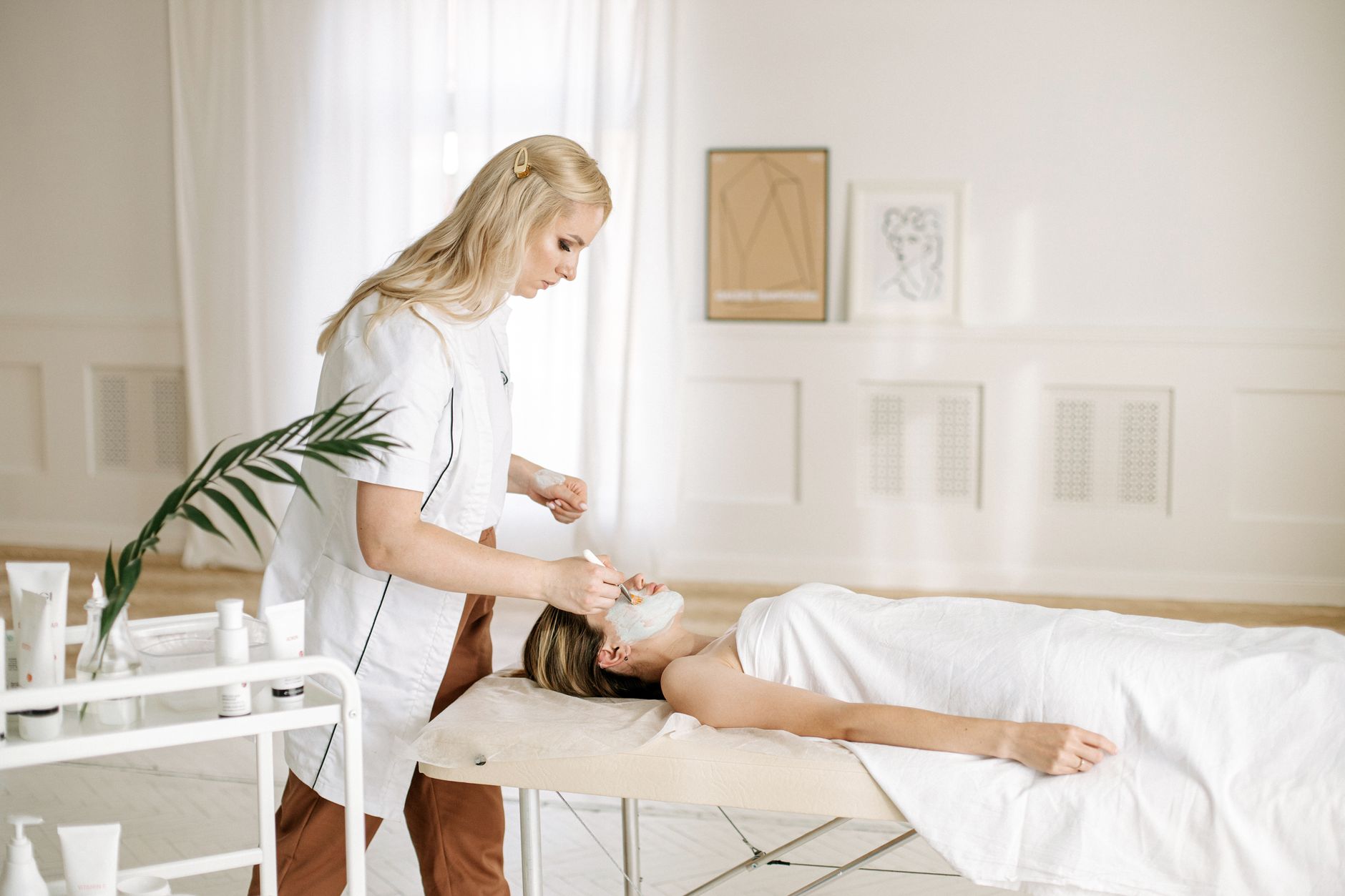
An esthetician program trains you to care for the skin: facials, cleansing and exfoliation, hair removal by waxing and tweezing, makeup, skin analysis, and the sanitation and state law you are tested on. It ends in a certificate or diploma from the school, which makes you eligible to sit for your state board exam. The license, not the diploma, is what lets you work.
957 esthetics programs at 837 schools in 51 states were checked on the schools’ own pages in November 2026. Of those, 852 are basic esthetics programs that prepare you for the first license, and 105 are master or advanced programs that go past it. Most are at private beauty schools: 664 of the schools are for-profit, and 156 are public colleges and technical centers.
You’ll also see the same training under other names: skin care, esthiology, aesthetics, facial specialist, and cosmetician in California. The name doesn’t matter. The hours and your state’s approval do.
How Esthetician Programs Compare by State Hours
Your state’s board sets the minimum hours, and the program you choose has to meet it. Most states sit at 600, but the spread is wide.
| State | Hours for the basic license | Exams |
|---|---|---|
| Alabama | 1,000, or 2,000 as an apprentice | Written and practical (PSI) |
| Kansas | 1,000 | Written and practical (Ergometrics), 75% to pass |
| Texas | 750 | Written and practical (PSI) |
| Illinois | 750 | Exam authorized by the state; offered in five languages from October 1, 2026 |
| Washington | 750 school hours, 800 apprenticeship | Exam approved by the director |
| California | 600 | Written exam (PSI) |
| New York | 600 | State written and practical exams |
| Vermont | 500 | Written and practical exams |
| Oregon | 444, plus 220 practical operations | School practical exam plus state written exam |
| South Carolina | 450 | NIC written and practical (Prov) |
| Pennsylvania | 300 | State theory exam |
| Florida | 220 (facial specialist registration) | None |
This is why program length varies so much from one state to the next. South Dade Technical College runs its 220-hour Florida facial specialist course in 9 weeks, one trimester, while Alabama asks for 1,000 hours before you can test. If you might move, check whether your new state would accept your hours: a 300-hour Pennsylvania license falls well short of a 600-hour state’s rule. The license hours checker shows every state’s rule, and each state’s page, such as the Texas esthetician license, lists fees and reciprocity.
What the Hours Are Made of
The hour total isn’t the whole rule. Several states also say what those hours must contain, and a program built for one state’s mix may not satisfy another’s.
- California requires a course of at least 600 hours of practical and technical instruction, of which at least 350 hours must be skin care.
- Oregon counts 444 hours plus 220 practical operations, with another 40 hours of career development and Oregon laws and rules.
- Colorado sets 600 contact hours for the license, then adds 24 more hours of training before you may do chemical resurfacing exfoliation and 132 more for permanent makeup.
- Texas sets 750 hours for the esthetician license, or 800 for a combination manicurist and esthetician license.
So when you compare programs, ask for the curriculum breakdown as well as the total, especially if you are looking at a school across a state line. If you add a specialty later, as Colorado’s permanent makeup hours show, the training may continue after the license.
What Esthetician Programs Cost
Among the 588 programs that publish tuition, the typical figure is $10,800. The range is wide because hours, school type and what’s included all differ.
Lowest published tuition. Florida’s short facial specialist courses at public technical colleges are the least expensive in the country. Robert Morgan Educational Center and Technical College and South Dade Technical College in Miami-Dade list $563.20 in-state tuition for 220 hours, with South Dade listing $600 in books and supplies separately. Private Florida schools such as Latin Beauty Academy ($1,400 tuition for 260 hours, with $600 equipment and $270 books separate) and Nouvelle Institute ($2,525 tuition for 224 hours) follow.
Typical 600-hour programs. Paul Mitchell the School-Phoenix lists $8,746 tuition with a $1,291.96 technical kit, Empire Beauty School-Chandler $10,340 covering tuition, kit, fees and taxes, and Tuana European Beauty Academy in Fort Collins, Colorado $7,000 tuition with $1,600 in kits and books.
Highest published tuition. Nova Academy of Cosmetology in Rochester, Minnesota lists $24,790 tuition plus a $5,700 kit listed separately for its combined advanced practice esthetics program. Aveda Arts & Sciences Institute Minneapolis lists $25,300 tuition plus a $3,550 kit for its 1,100-hour combined esthiology and advanced practice program.
Watch what each figure covers. A few schools, such as Empire, publish one figure that folds in the kit, fees and taxes; most list tuition and show the kit, books, registration and fees as separate lines. Compare tuition with tuition, and the kit lines on their own, using the school cost comparer, and read the esthetician school cost guide for what drives the price.
Esthetician Programs by State
Programs verified on each school's own pages, November 2026, at 837 campuses.
Beauty School or Community College
Most esthetician programs are at private beauty schools and chains, but 174 of the 957 are at public colleges and technical centers. The two differ in ways that matter:
- Price. Public programs are often the least expensive. Davidson-Davie Community College in North Carolina lists its esthetics program as 16 credit hours at $1,216 plus $386.25 in fees, and Indian River State College in Florida lists an approximate cost of $1,500.
- Length and calendar. College programs are often described in terms. Indian River runs its program in about one semester and South Dade in one trimester, while a private school like Empire Beauty School-Chandler describes its 600 hours as 18 weeks full time or 35 weeks part time.
- Residency. Public tuition can depend on where you live. Robert Morgan lists $563.20 in-state and $2,255 out of state for the same 220 hours.
- Accreditor. Colleges name a regional accreditor such as SACSCOC or the Higher Learning Commission; beauty schools usually name NACCAS.
If cost matters most, check the community and technical colleges in your state first, and confirm when the next term starts. If you need evening or weekend classes, compare the beauty schools’ published schedules side by side, and check whether a college offers an evening section, as Indian River does with its day and evening classes.
Schedules: Full Time, Part Time, Evening and Hybrid
Full time is the default: the typical program finishes in about 24 weeks. But many programs flex:
- 290 programs list part-time classes and 216 list evening classes. Empire Beauty School-Chandler runs 600 hours in 18 weeks full time or 35 weeks part time.
- 16 programs run weekend classes.
- 104 programs are hybrid, moving part of the theory online. Avalon Institute-Mesa pairs hybrid theory with 21 weeks of days or 33 weeks of evenings.
No program in this set is fully online, because the practical hours are hands-on work on clients and classmates. See the online esthetician school guide for what you can study remotely, and the part-time and evening ranking for the most flexible schools.
Accreditation, Financial Aid and Results
Accreditation. 675 of the 957 programs are at schools that name an accreditor, and 509 name NACCAS, the accreditor beauty schools name most often. Colleges name a regional accreditor, and some career schools name COE, ACCSC or Middle States.
Financial aid. 691 programs are at schools that say they take federal student aid. The financial aid ranking lists them.
Results. 269 programs publish outcome rates. The typical program reports 94% licensure, 86% completion and 74% placement. Bellus Academy-Chula Vista, for example, reports 2024 completion of 92.86%, placement of 61.54% and licensure of 100% for its 600-hour program. Read whether a rate covers esthetics alone or the whole campus; the best outcomes ranking explains the differences.
Basic Esthetics or a Master Program
Most students start with a basic program sized to their state’s license. Washington, Utah, Virginia, Minnesota, Ohio, Nevada, Oregon, North Dakota and the District of Columbia also have a master or advanced tier, and the 105 master programs here run from 150 to 1,300 hours. If you want clinical or device work later, the master esthetician programs ranking compares the longer programs.
How to Choose an Esthetician Program
- Confirm the hours match your state’s rule. Start with the table above or the license hours checker.
- Confirm the school is licensed by your state board, so your hours count.
- Compare the published tuition, then the kit, books and fees each school lists separately.
- Pick the schedule you can keep. Part time adds weeks; missed hours add more.
- Look for a published pass rate with its year, and prefer one for esthetics alone.
- Check aid eligibility if you’ll use federal grants or loans.
For the full path from enrollment to license, read how to become an esthetician and how long esthetician school takes. To compare schools directly, start with the best esthetician schools ranking, the affordable esthetician schools ranking, your state’s list such as esthetician schools in Florida, or the school finder.
Frequently Asked Questions
How Many Hours Is an Esthetician Program?
Most states require 600 hours, which is also the median program length. The range across states runs from 220 hours for Florida's facial specialist registration to 1,000 in Alabama and Kansas. Texas, Illinois, Washington and Michigan sit at 750.
What Does State-Approved Esthetician Program Mean?
It means a program at a school your state licenses or approves, so the hours you log count toward your license application. Texas, for example, requires its 750 hours at a barbering or cosmetology school licensed in Texas. Confirm the school is licensed in the state where you plan to work.
How Much Does an Esthetician Program Cost?
The typical published tuition among the 588 programs that list one is $10,800. Short Florida facial specialist courses at technical colleges start at $563.20 in-state tuition, and the highest is $25,300 at Aveda Arts & Sciences Institute Minneapolis, with a $3,550 kit listed separately.
Can You Take an Esthetician Program at a Community College?
Yes. 174 of the 957 programs verified are at public schools, mostly community and technical colleges. Davidson-Davie Community College in North Carolina lists its esthetics program as 16 credit hours at $1,216 plus $386.25 in student fees.
How Many People Finish Esthetician Programs Each Year?
Schools reported 38,081 esthetics awards to the U.S. Department of Education for 2022-23, across 618 schools. Those are certificates and degrees conferred, not a count of licensed graduates.
Are Esthetician Programs Offered Online?
Only in part. 104 of the 957 programs are hybrid, moving some theory online, while hands-on practice stays on campus. No program in this set is fully online.
Keep Reading
- How Long Esthetician School TakesHow many clock hours and weeks esthetician school takes, by state requirement and by the schedules schools publish
- Online Esthetician SchoolWhat part of esthetician training can be online, which schools run hybrid theory and why the practical hours stay in person
- How to Become an EstheticianThe school hours, state board exams and license steps that take you from no experience to a licensed esthetician
- Esthetician School CostWhat esthetician school costs, from the program tuition figures schools publish, what the total leaves out and how to pay for it
- Master EstheticianThe states with a master or advanced esthetics license, the hours they require and the schools that train for it
- Best Esthetician SchoolsEvery verified program, ranked
- Esthetician License by StateHours, exams and fees in every state
Sources
- Texas Department of Licensing and Regulation: esthetician license
- Alabama Board of Cosmetology and Barbering: esthetics license
- Florida DBPR: facial specialist registration
- California Board of Barbering and Cosmetology: license requirements
- NCES IPEDS: completions by program (CIP 12.0409)
- State licensing boards' esthetician license pages, checked November 2026